At Age 72, I Married My High School Sweetheart. Two Weeks Following My Eviction By His Children, With Only My Burial Dress In Hand, His Lawyer Arrived At My Trailer And Told Me, “Your Husband Made Sure You Got EXACTLY What You Deserved.”
PART 1
Back in the spring of 1972, Desmond Wray kissed me behind the bleachers at Millbrook Falls High School and made me a promise he had no real way of keeping yet.
“Margaret,” he said, “someday I’m going to buy you a diamond ring.”
I laughed at him. I was seventeen, he was eighteen, and neither of us had two dollars to rub together outside of what we made bagging groceries on weekends.
Life pulled us apart before he ever got the chance to try.
His father took a transfer out to the coast that same August, right before our senior year, and there wasn’t much a seventeen-year-old girl in 1972 could do about a family moving three thousand miles away except write letters that slowly, inevitably, stopped coming.
I married a kind man named Harold two years later. Desmond, I heard eventually through an old classmate’s Christmas card, had married a woman named Constance out west. We both raised families. We both, in our own separate corners of the country, buried spouses we’d loved honestly and well — Harold passed of a stroke eleven years ago, Constance, I would later learn, had gone six years before that, slow and hard, cancer taking its time about it.
Fifty-three years went by with Desmond Wray and me never once crossing paths.
Then, this past January, he found me at a church bake sale two towns over from Millbrook Falls, standing behind a folding table selling lemon bars I’d made from my mother’s recipe.
“You still wear your hair the same,” he said, and I nearly dropped the cash box.
“And you still talk too smoothly,” I said back, because some habits, it turns out, outlast half a century just fine.
He asked me to marry him three months later, in April, sitting on a park bench that overlooked the same lake where we’d once gone fishing as teenagers and caught nothing but sunburn.
I said yes.
Not for a house I’d never seen. Not for money I had no use for at seventy-two years old.
I said yes for the boy who’d once walked me home two miles in the rain and never once complained about his ruined shoes.
PART 2
His children never believed a word of it.
Louise, his daughter, was fifty-one, sharp-jawed and sharper-tongued, the kind of woman who’d built an entire career out of not being told no. Roy, his son, was forty-eight, quieter than his sister but no less certain, in his own way, that his father had lost his good sense somewhere around the same time he’d lost his second wife.
They came to exactly one dinner together, the four of us, three weeks before the wedding. Louise spent most of it asking pointed questions about my late husband’s estate, my current living situation, whether I’d signed anything yet.
“I’m not signing anything, dear,” I told her. “I’m marrying your father because I love him, not because I need his checking account.”
“That’s what they all say,” Louise said, and Desmond had to put a hand on her arm to keep the rest of that sentence from finishing itself.
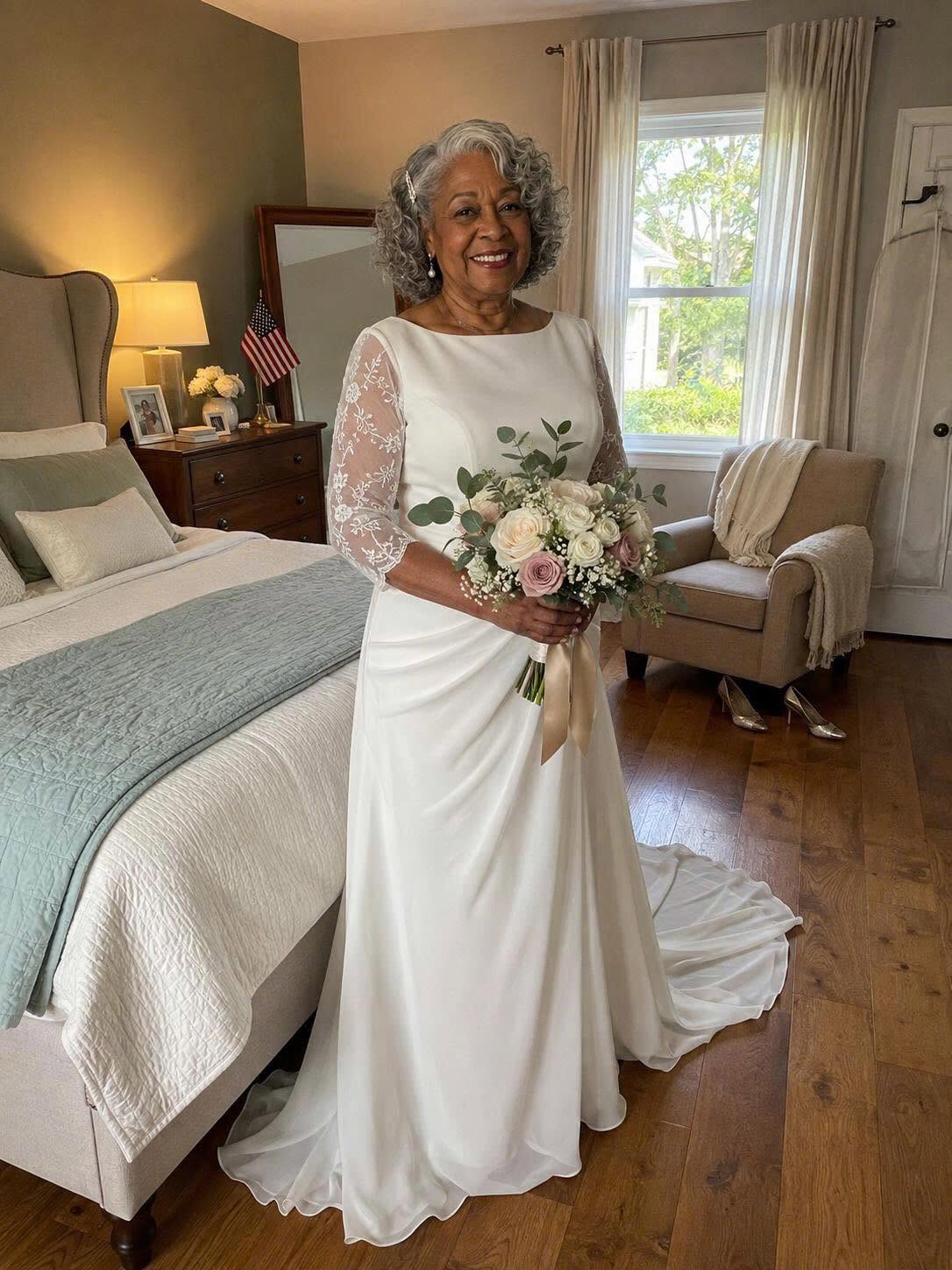
We married in June, at the same little church where he’d found me selling lemon bars five months earlier, forty guests, most of them people who’d known one or both of us since before either set of children existed. Louise and Roy came. They stood in the back the entire ceremony with the particular stillness of people attending a funeral rather than a wedding.