The first time I met Noah Cole, he was sitting on the curb across from my house on Cedarbrook Lane with his hands tucked beneath his armpits because his coat was too small to cover them.
It was late November in Bellmere.
The kind of afternoon when darkness arrived before dinner and the wind pushed dead leaves along the pavement in little circles.
I had been bringing groceries in from my car when I noticed him.
Eight years old.
Thin.
Brown hair falling into his eyes.
A backpack beside his shoes.
He was staring at the house behind him but making no attempt to go inside.
I carried the last grocery bag to my porch.
Then looked back.
He was still there.
My husband, Thomas Bennett, appeared behind me.
“You’re letting the cold in.”
“There’s a little boy across the street.”
Thomas barely glanced toward him.
“The Coles’ kid.”
“You know him?”
“I’ve seen him.”
“Why is he sitting outside?”
Thomas shrugged.
“Maybe he likes sitting outside.”
It was thirty-eight degrees.
I looked at Thomas.
He understood that look.
“Eleanor.”
“What?”
“Don’t adopt every sad thing you see.”
“I’m taking him hot chocolate.”
“That is exactly how these things start.”
I smiled.
“You married me anyway.”
I carried a mug across Cedarbrook Lane.
Noah watched me approach with an expression that was far too cautious for an eight-year-old.
“Hi.”
“Hi.”
“I’m Eleanor.”
“I know.”
That surprised me.
“You do?”
“You live there.”
He pointed toward my house.
“Good detective work.”
He almost smiled.
I held out the mug.
“Hot chocolate.”
His eyes widened.
Then narrowed.
“Does it have sugar?”
“Yes.”
He looked toward his own house.
“Am I allowed?”
“I don’t know.”
He hesitated.
Then whispered:
“My mom says sugar makes people weak.”
I sat on the curb beside him.
“Well, I’ve been eating sugar for forty years, and I can still carry six grocery bags at once.”
That got the smile.
He accepted the mug.
The first sip changed his entire face.
“Oh.”
“Good?”
He nodded seriously.
“Very.”
A few minutes later, I learned why Noah was outside.
His parents had gone to a dinner hosted by their church.
He had been told to stay inside and finish extra schoolwork.
Then he spilled soup on the kitchen floor.
His father became angry.
Noah was told to “sit somewhere and think about responsibility.”
Apparently somewhere meant outside.
I stared at him.
“How long have you been here?”
He shrugged.
“Maybe an hour.”
I looked toward his house.
Every curtain was closed.
“Noah.”
“Yes?”
“You’re coming inside my house until your parents return.”
His fear came back immediately.
“They’ll be mad.”
“They can be mad at me.”
“You don’t know my dad.”
“No.”
I smiled.
“But he doesn’t know me either.”
That was the beginning.
Not of an adoption.
Not officially.
Nothing dramatic.
No authorities came.
No courtroom decided I mattered to Noah.
He simply began crossing Cedarbrook Lane.
At first once a week.
Then three times.
Sometimes almost every day.
His parents were not monsters in the obvious way.
Their home was spotless.
Noah had good clothes, though always practical ones.
Perfect grades.
Perfect attendance.
Music lessons.
No bruises.
No empty refrigerator.
His father believed discipline produced character.
His mother believed pleasure created weakness.
No candy.
No television on school nights.
No birthday parties unless educational.
No sleepovers.
No “wasted time.”
Noah’s life was structured so carefully there seemed to be nowhere inside it for being a child.
At my house, he discovered grilled cheese.
Then pepperoni pizza.
Then chocolate-chip cookies.
The first time he ate one, he held it in both hands and asked:
“Do I have to earn this?”
I laughed.
“No.”
“Why not?”
“Because it’s a cookie.”
He looked suspicious.
“That’s all?”
“That’s all.”
He took one bite.
Then closed his eyes.
I remember thinking no child should look grateful enough to cry over chocolate chips.
Thomas never understood why Noah mattered so much to me.
We had no children.
Not by choice.
Not exactly.
There had been pregnancies.
Then losses.
Then years of appointments.
Then a point when doctors stopped saying unlikely and began saying impossible.
Thomas accepted it faster than I did.
He built a life around work.
Investments.
Home renovations.
Retirement plans.
I filled the empty spaces with volunteering, neighbors, cooking too much food, and eventually Noah.
When Noah was ten, he began helping me garden.
At twelve, he mowed our lawn without asking.
At thirteen, he learned how to repair my old bicycle.
At fourteen, he grew tall enough to reach the top shelves in the garage.
Whenever I tried to pay him, he refused.
“You already pay me.”
“With what?”
“Dinner.”
Thomas would hear this and shake his head.
“You’re spoiling him.”
“No.”
“You are.”
“He’s helpful.”
“He’s always here.”
“So?”
“He has parents.”
I looked at him.
“So did I.”
Thomas knew what I meant.
My mother had been alive throughout my childhood.
That did not mean she had ever known me.
He changed the subject.
The older Noah became, the more uncomfortable Thomas seemed around him.
Not openly.
Subtly.
If Noah entered the garage, Thomas appeared.
If Noah asked about something on a shelf, Thomas answered too quickly.
If Noah stayed for dinner, Thomas sometimes invented a reason to eat in his office.
I once asked:
“Do you dislike him?”
“No.”
“You act like you do.”
“He watches things.”
“He’s curious.”
“He asks questions.”
“He’s a teenager.”
Thomas stared at me.
“Curiosity is not always harmless.”
I laughed.
“What exactly are you hiding?”
He smiled.
“Millions.”
I assumed it was a joke.
Years later, that sentence would return to me.
The first time I noticed the black metal case was when Noah was fifteen.
He was helping me clear old paint cans from a cabinet in the garage.
Behind them sat a rectangular case with a combination lock.
Noah lifted it.
“What’s this?”
Before I could answer, Thomas entered.
His reaction was immediate.
“Put that down.”
Noah froze.
“Sorry.”
“I said put it down.”
He did.
Thomas picked up the case himself.
“What’s in it?” I asked.
“Old business documents.”
“Why are you acting like he found plutonium?”
Thomas looked at Noah.
Then at me.
“Because I don’t like people touching private things.”
Noah apologized twice.
After he left, I confronted Thomas.
“He’s a child.”
“He’s fifteen.”
“That is generally considered a child.”
“He notices too much.”
I stared.
“What does that even mean?”
Thomas shook his head.
“Nothing.”
Then carried the black case upstairs.
I never saw where he put it.
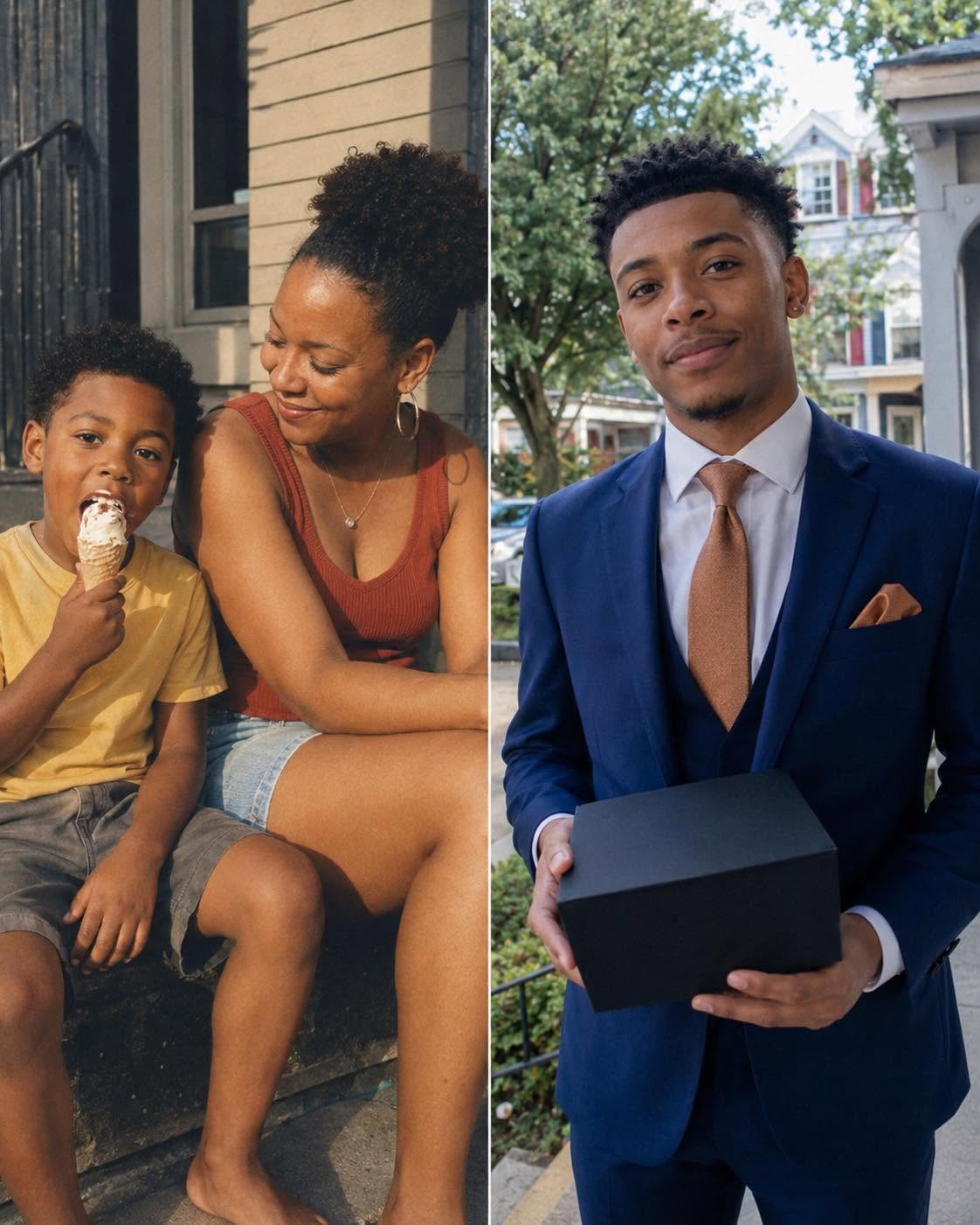
Three years later, Noah received a scholarship to a university nearly five hundred miles from Bellmere.
He was eighteen.
Tall.
Smart.
Still pushed his hair away from his forehead whenever he was nervous.
The night before he left, I prepared the most irresponsible meal his parents would have hated.
Pizza.
Garlic bread.
Cake.
Three kinds of ice cream.
No vegetables.
No apology.
Noah looked at the table and laughed.
“This may actually kill me.”
“Then die happy.”
Thomas looked over his newspaper.
“That is not funny.”
Noah and I both laughed harder.
Later that evening, he helped me clean the kitchen.
“You’ll visit?”
I asked.
“I’ll try.”
“You’d better.”
“Mrs. Bennett.”
“Eleanor.”
He smiled.
He had never been able to call me that comfortably.