Reduces Joint Wear and Tear: Evenly balances pressure across articular cartilage, lowering the risk of premature osteoarthritis in the knees and hips.
Improves Athletic Power and Balance: Enhances force transmission from the ground through the hips for smoother walking, running, and jumping.
Relieves Lower Back and Hip Strain: Promotes a neutral pelvic tilt that takes excessive stress off lumbar vertebrae and sacral joints. 🏃♂️
Enhances Daily Endurance: Reduces muscular fatigue in the calves, hamstrings, and shins during extended standing or walking.
Important Safety Warnings & Common Myths to Avoid
Navigating structural posture requires separating physiological facts from unrealistic corrective claims:
Skeletal Versus Muscular Imbalance: While targeted exercise strengthens stabilizing muscles and improves functional alignment, severe adult bone curvature cannot be flattened through stretching alone; structural deformities require orthopedic consultation. ⚠️
Avoid Forcing Joint Alignment: Never strap legs tightly or force knees into unnatural positions during exercise, as this can strain crucial stabilizing ligaments like the ACL and MCL.
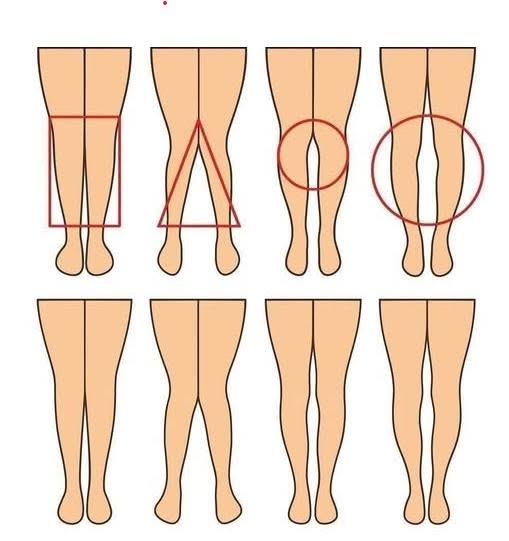
Address Foot Overpronation: Collapsing arches frequently cause knock-knee mechanics; ignoring foot support can undermine any hip or leg rehabilitation routine.
Core Metrics and Biomechanical Profile
Alignment Metric Normal Standard Range Biomechanical Impact
Q-Angle (Men) 10 to 14 degrees Balances patellar tracking over the femoral groove
Q-Angle (Women) 14 to 18 degrees Wider pelvic structure naturally increases valgus angle
Intermalleolar Distance Less than 5 centimeters Standard space between ankles in neutral standing posture
Intercondylar Distance Less than 3 to 4 centimeters Standard space between inner knee borders
Long-Term Maintenance and Postural Correction Strategies
Sustaining healthy lower body mechanics requires consistent movement habits and functional strengthening. Incorporate targeted glute bridges, clamshells, and lateral band walks into your weekly routine to strengthen the hip abductors that keep knees tracking straight.
Stretch tight inner thigh muscles and calves regularly to maintain full range of motion in the ankles and hips. Choose supportive footwear with adequate arch support, practice mindful walking posture, and avoid resting in awkward positions like cross-legged sitting for extended periods to protect your joints over the long term.
Frequently Asked Questions (FAQ)
Can exercises completely fix adult leg alignment shapes?
Targeted physical therapy and strength training can significantly improve functional posture, muscle balance, and knee tracking, though genetic bone architecture remains fixed in adults.
Do flat feet cause knock knees?
Yes, collapsed arches cause the ankle to roll inward (overpronation), which drives the tibia and knee joint into an inward valgus angle.
When should I see an orthopedic specialist for leg alignment?
You should consult a physician if you experience chronic knee pain, localized swelling, joint instability, or difficulty walking long distances.
Paying close attention to your leg alignment shapes is a proactive way to understand your body’s unique mechanics, protect your joints, and build lasting strength for an active, pain-free life!